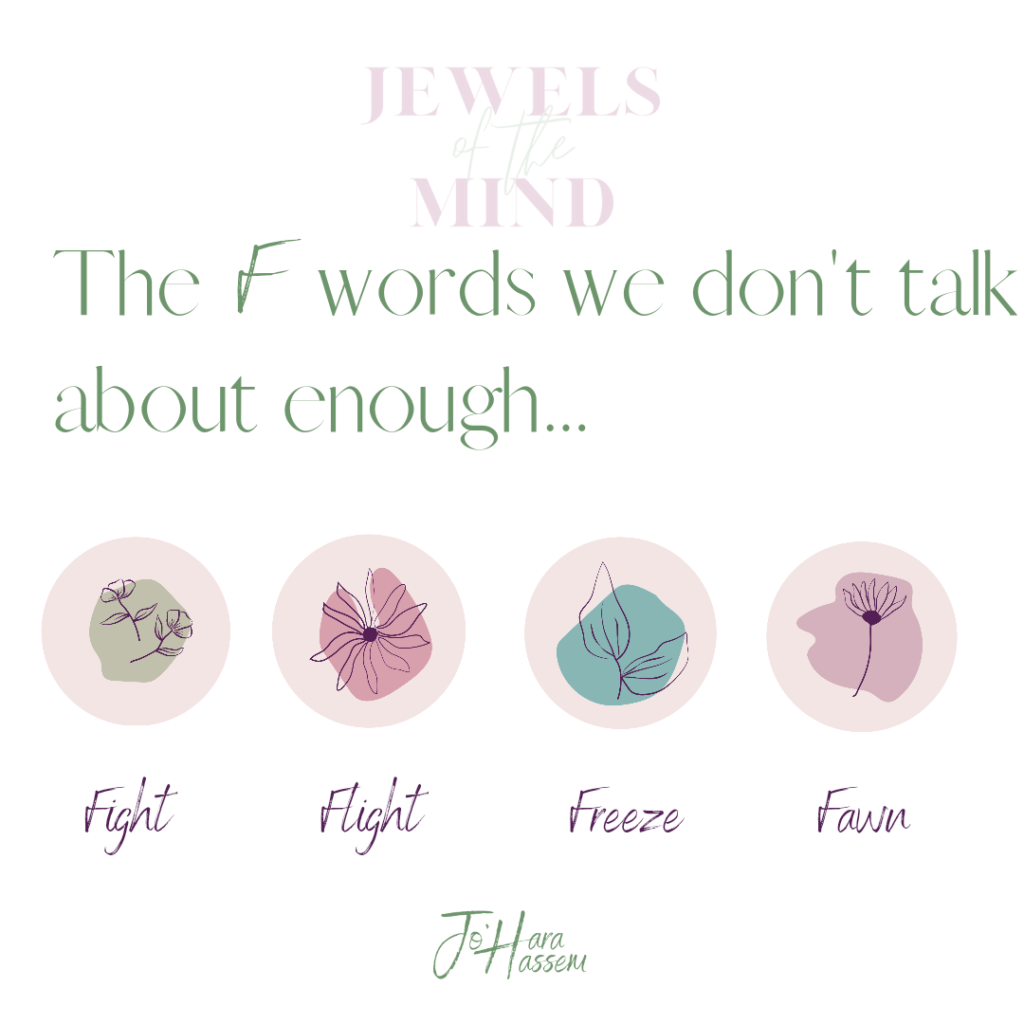
When our nervous system is activated, one of 4 responses occur. We go into fight, flight, freeze or fawn.
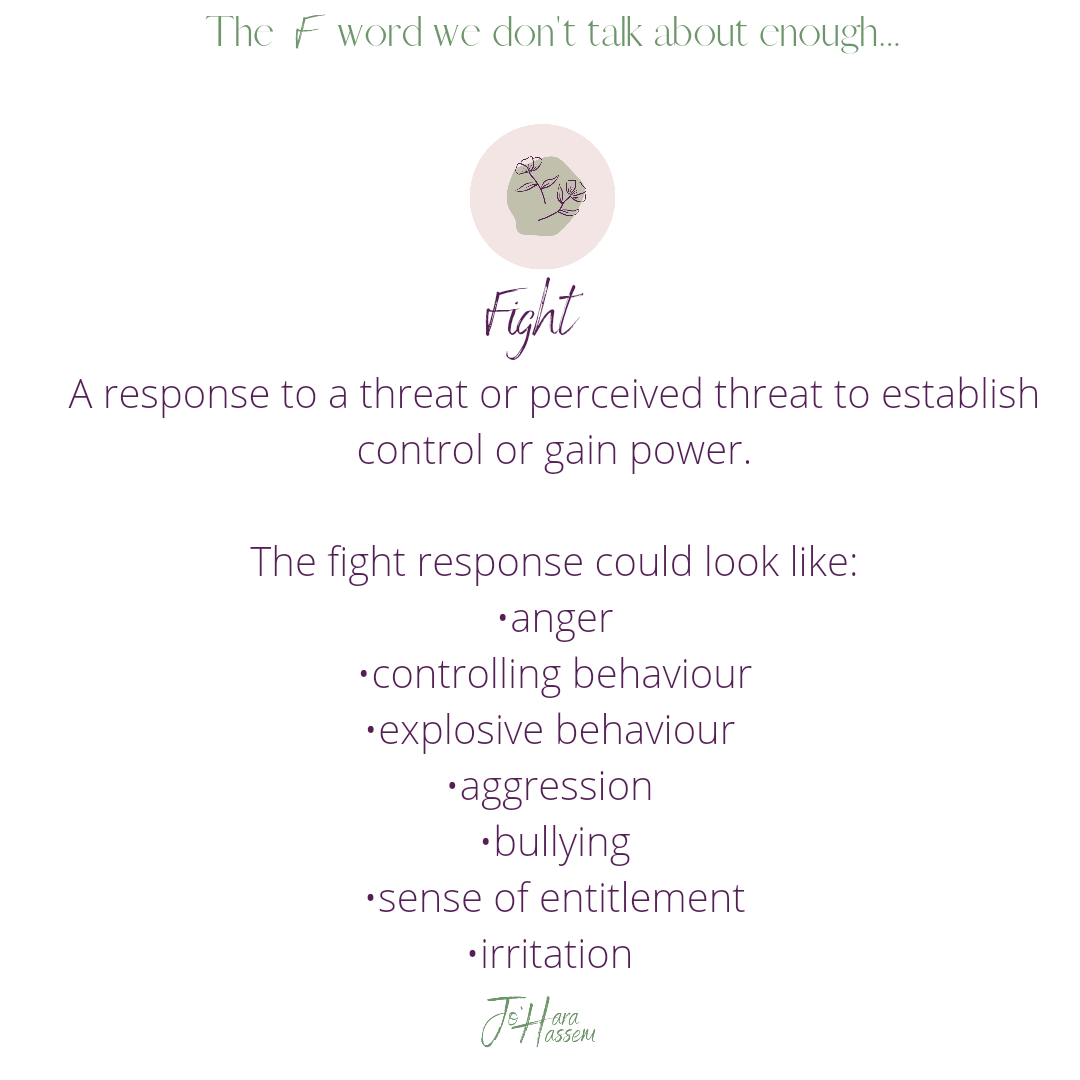
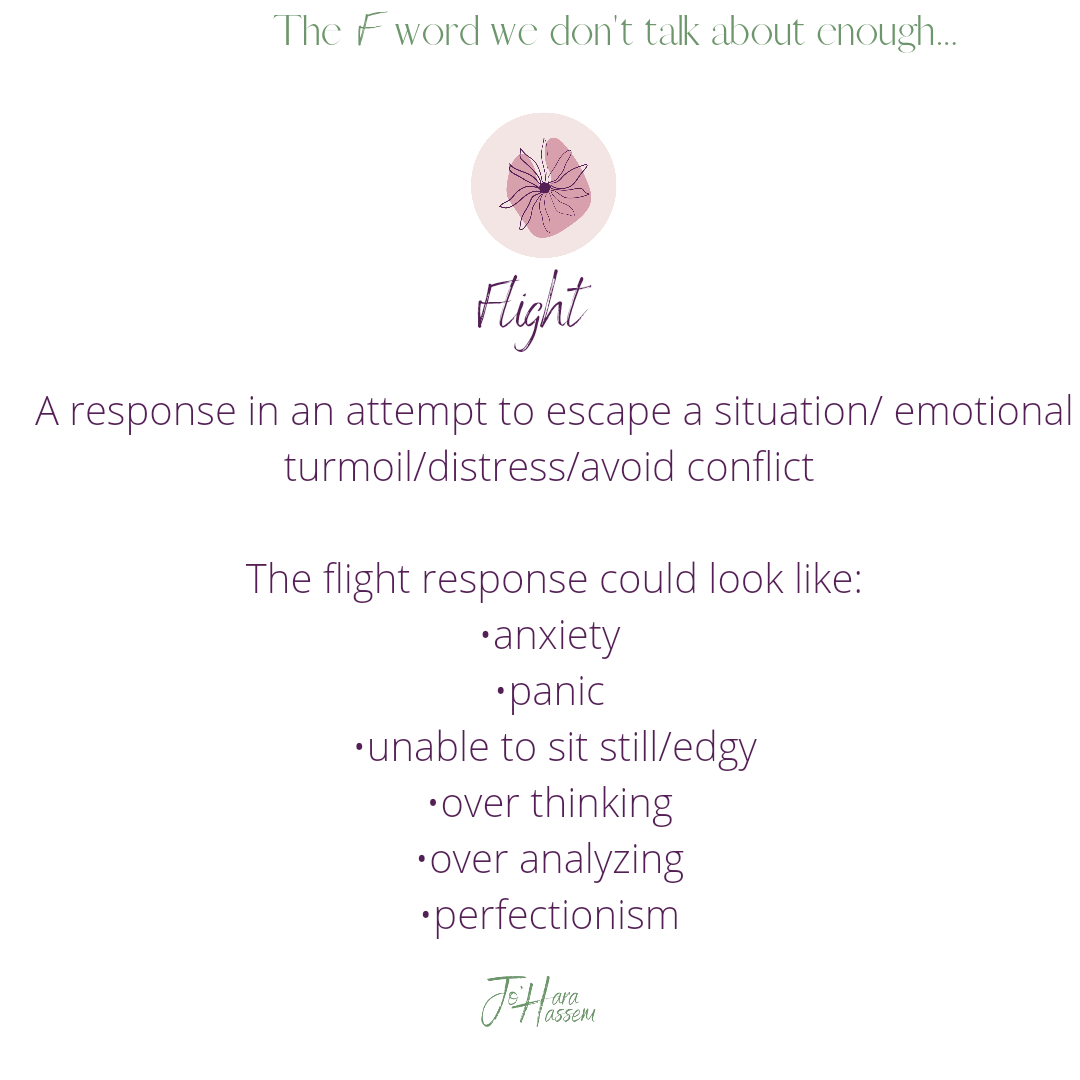
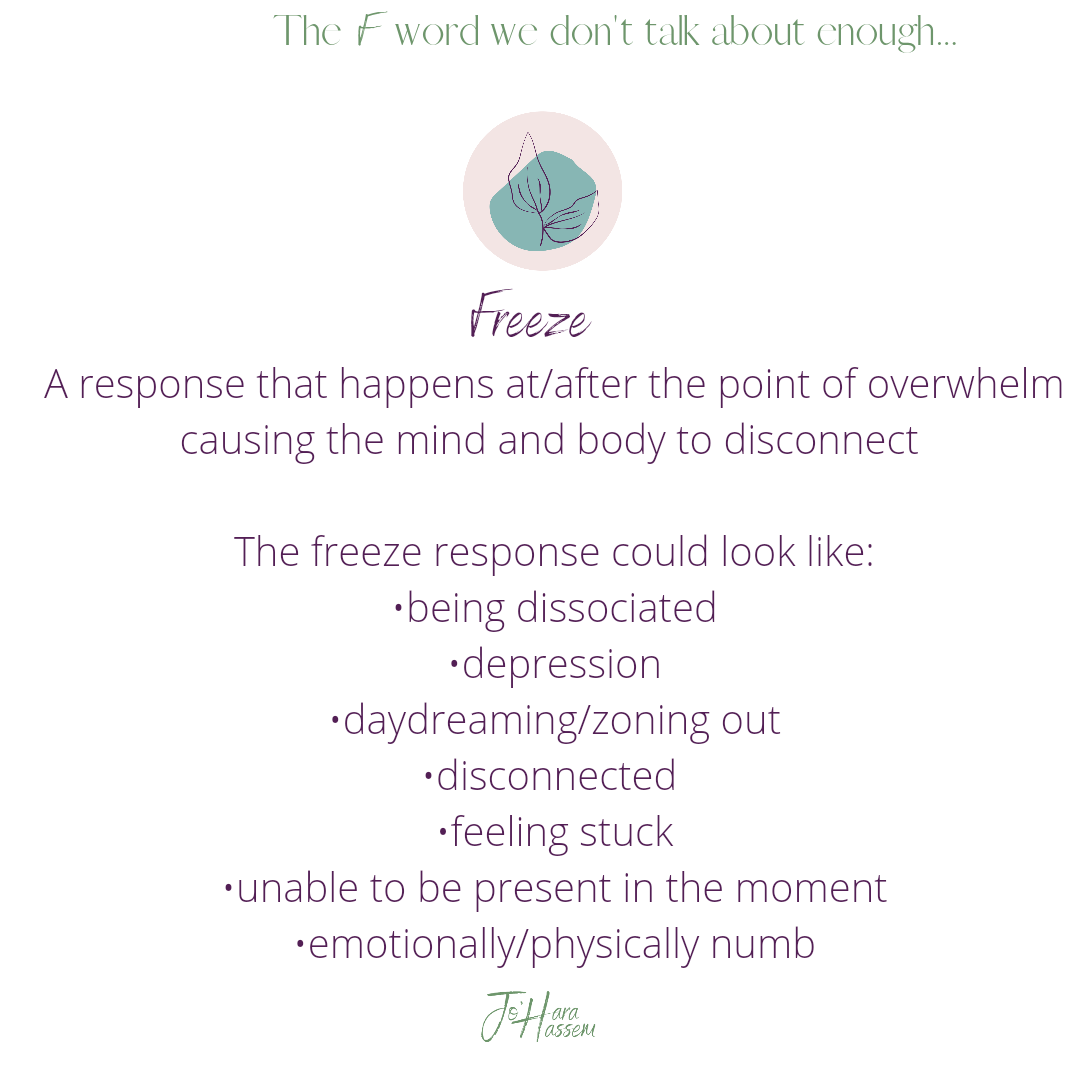
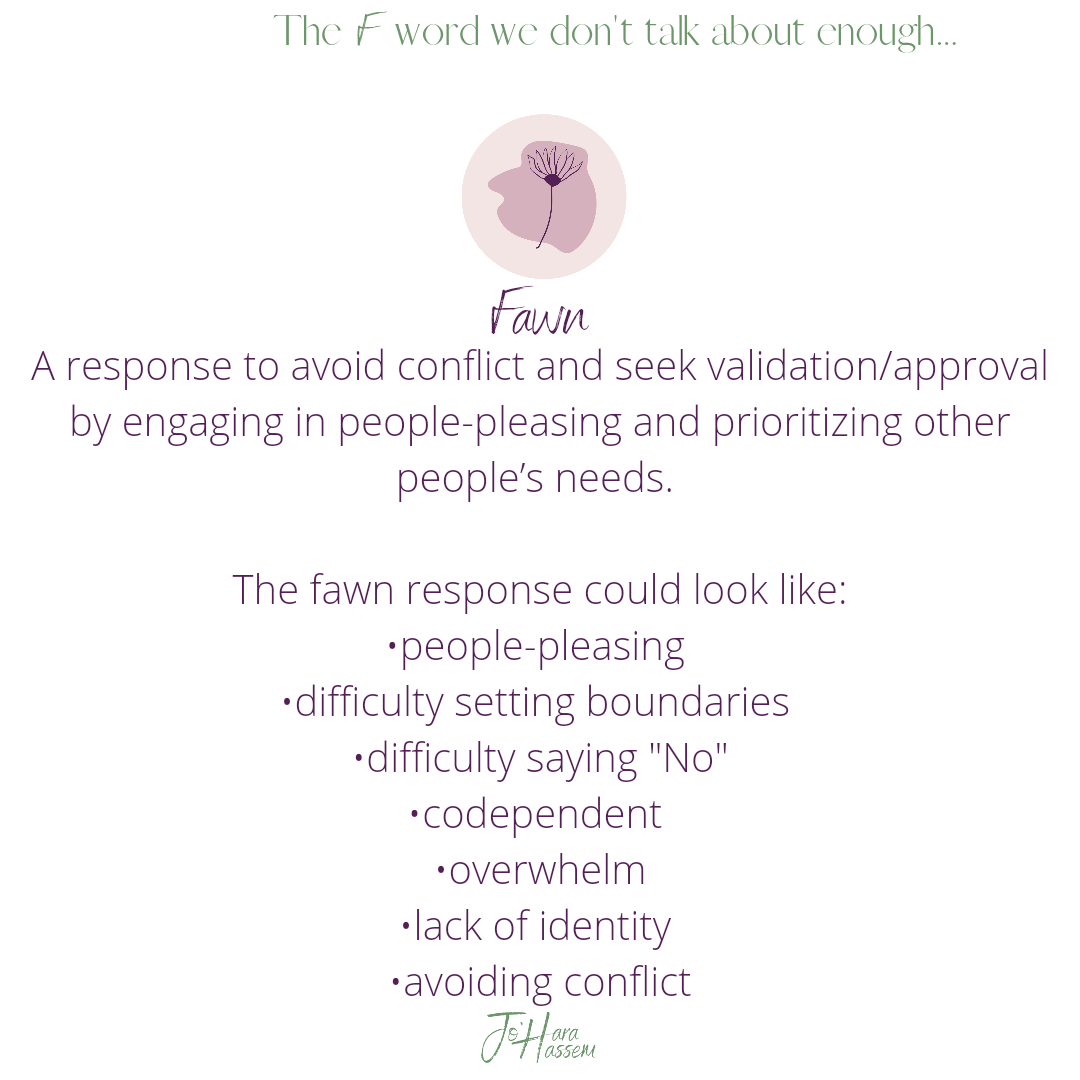
For the better part 3 decades, my nervous system was highly activated – early childhood and adolescence looked like a freeze and fight and into my 20s I was an ever obliging people-pleaser swaying between the fawn and fight. So much so, that in my very early coaching days, during training, we were given an assignment to ask people who care about us deeply, what our blind spots were. I received an unprecedented and very similar response from my husband, sister and closest friend. It went something along the lines of “you don’t know how to say to no and then you burn out – you allow people to take advantage of you until you lose your sh!t…” there was even a consensus that me losing control was scary and ugly. Sadly, they were all right. They had first hand experience of my burnout and subsequent losing my cool.
Having an activated nervous system without the right tools to regulate it, also meant that I co-created a lot of the domestic abuse in my marriage. No one ever deserves physical, emotional or psychological abuse, but I could finally understand why violent patterns were repeated in my marriage. It was my nervous system.
We often hear that abuse cycles are repeated in generations. Children that grow up in volatile and violent home environments are more susceptible to domestic violence in their own intimate relationships, either as the victim or the perpetrator. I naively believed that was just because of the familiarity of abuse. While that may be true, it goes much deeper. That familiarity is stored in the nervous system.
Let me explain. When a child grows up in a hypervigilent state, their nervous system is in a constant state of fight (rudeness, aggression), flight (wanting to escape), freeze (dissociating/self harm) or fawn (wanting to appease your abuser to ward of further abuse). This becomes a normal state of being for that child. When that child grows up and faces calm, predictable and loving interactions, this is considered unfamiliar. Our brains are incredible at sourcing predictable outcomes. In a counterintuitive way, our brains will stoke a reaction to create an environment that feels more familiar. Even if that familiarity IS unsafe and dangerous. For as long as it’s predictable and engages the nervous system in a way that feels most familiar, the brain will consider it safe. In the extended version, fawning was my way of seeking acceptance, proving my value/worth and getting approval.
That explains how I couldn’t stand up for myself to extended family or how my loving, gentle and calm husband could turn aggressive. It wasn’t him, it was me. My nervous system didn’t feel safe in a nurturing, supportive environment. And even with all the love and care, I allowed people to take advantage of me because healthy love and acceptance wasn’t modelled in my childhood. The destructive fragments from narcissist abuse also superseded any opportunity to receive any love and support.
The way our nervous system has been wired is not a life sentence. All the responses we engage in are learned responses to keep us safe. We can un-learn them. Working with a coach and TRE therapist made the change in creating a better awareness of my reactions and responses. This gives me better control to regulate myself. Because we’re human, we’re always learning and growing. I hope to always learn better ways to manage myself.



1 Comment
Jehan Ara · 3 August 2022 at 5:03 am
Ahh, I’ve never heard of Fawn before. Makes so much sense. Feeling much calmer just being able to recognise every emotion and its pattern. Thank you! <3